Persona 5

Developed by Atlus

Released: 2016 (PS3, PS4 – Japan Only), 2017 (PS3, PS4 – Everywhere Else)

persona5_cover_feature
new crew, new mascot character

Premise

Persona 5 is the newest game in the Shin Megami Tensei spin off series, and the first to officially drop the mainline series’ name from its title. Like previous entries, Persona 5 blends together turn-based RPG combat and dungeon crawling with time management and visual novel gameplay aspects. Though it originally debuted in late 2016 in the Japan region only, it was released worldwide several months after.

Persona 5 yet again has the player assuming the role of a Japanese high school student, this time one who is accused of a crime he did not commit. Expelled from school and put on probation, the canonically named protagonist Akira Kurusu is forced to move to Tokyo, live with a temporary guardian, and attend the nearby Shujin Academy for his schooling. However, it’s not long before his rehabilitation is derailed, and a new, much stranger journey begins.

Gameplay

By now, the Persona formula has become somewhat familiar to gamers. Part dungeon crawler and part visual novel, players must balance different aspects of a high school student’s life against an impending threat that will spell doom for them should it be left unchecked. On the surface, not much has changed apart from the cast and setting. Each individual component of the Persona formula, however, has been upgraded and refined to add depth or improve quality of life for the player. For example, while Persona 4 required players to manually check or memorize locations and schedules for socializing, Persona 5 tracks characters by location and indicates their availability clearly, cutting the fat of wandering around previously explored areas ad nauseum from the gameplay loop. Similarly clever tweaks have been made to a number of systems, including combat, which has received an overhaul that increases players’ tactical options significantly. Though too numerous to list in their entirety, these additions better the player experience when compared to previous Persona games to the point where replaying older installments may become challenging.

Persona-5-Painting-Puzzle-3-1024x576.png
‘visually unique’ is an understatement


Persona games of late have each carried with them a different theme that is reflected in numerous aspects of gameplay and visuals, but none is as strong as how Persona 5‘s Phantom Thief motif influences its improved dungeon crawling. Dungeons are now a series of varied locations with traditionally high security, and they must be burgled of their most valuable possession. Story dungeons, excluding an optional dungeon that admittedly is quite repetitive, are now highly designed experiences that feature labyrinthine structure, real-world event gating, a guard alertness system, traps, and rest stops that act as checkpoints and shortcuts. Each dungeon also has a few unique components that differentiate it from its predecessors beyond its radically different appearance. The goal is still to reach the end and defeat the boss, but even the simple act of engaging the boss has received a stylish pass of Phantom Thief inspiration. The difference between ‘reach the end and defeat the boss’ and ‘carefully map out an entry route to steal the treasure from the boss’ is how much more satisfying these new ‘heists’ feel in comparison.

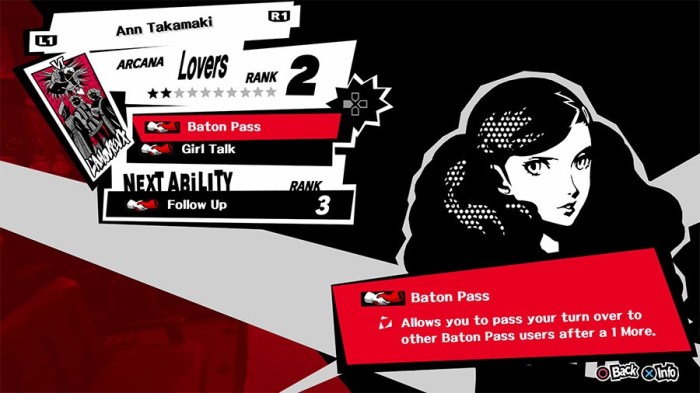
A smaller aspect of Persona 5‘s new design that has been sorely overlooked is the alteration to the social link system. Confidants, or, as they were referred to in previous games, Social Links, are relationships that you develop with various characters in the game. This is the visual novel aspect of Persona games: spending time with these characters and making conversation choices to deepen your relationships. This, in turn, improves the protagonist’s creation abilities with the arcana of Persona that character represents. Though often important for fusing and creating optimum combat strategies, the social link system’s connection to other gameplay elements has always been rather weak. Confidants, be they party members or random people met on the street, now all have their own special side quests and unlockable abilities that can grant the Phantom Thieves a variety of bonus effects. These can run the gamut from combat skills and tactics to special time management techniques and equipment unlocks, and almost always have a significant impact on gameplay at their later ranks. This tightens the motivation to explore each and every character relationship to its fullest, even if it might be difficult to do so.
Persona-5-Confidant-Guide-Ann-900x506.jpg
Phantom Thief Confidants have special techniques like Baton Pass

Presentation

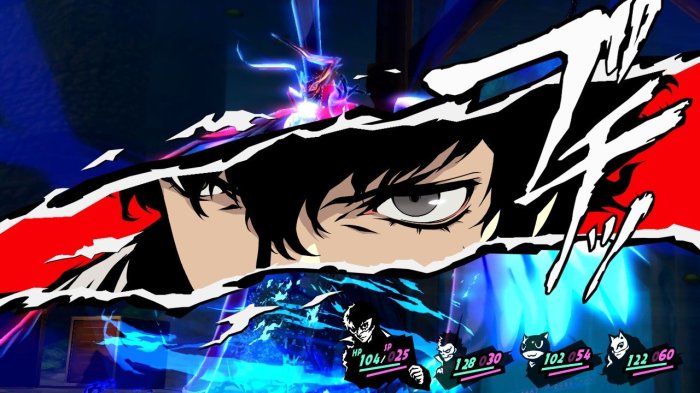
It’s no secret that the Persona series oozes style, but Persona 5 fully commits to creating a singular set of visual aesthetics. Though hard to simply describe, Persona 5 adds a kind of aggressive comic styling to all of its menus and user interface, all based on a color scheme of primarily shades of white, red, and black. While the previous two installments of Persona entries kept their user interfaces largely minimalist and based on a single color, Persona 5’s is a noticeable departure. In addition to interface styling, more detail and expressiveness is apparent in Persona‘s particular brand of manga-esque character models and now highly-popularized version of visual onomatopoeia. The visual design, combined with the expectedly catchy, memorable, and occasionally silly Shoji Meguro original soundtrack (the most memorable of which can be found here), creates an unforgettable atmosphere.
original.jpg
red, black, and white – apparently that’s all you need

Legacy

At this point, it seems clear where this review would find Persona 5 in its lineage – as the natural evolution and most complete version of itself. Though there are ways to argue that components of previous incarnations could be considered comparable or superior, perhaps in character writing or story direction, as an overall package it’s hard to make that claim. Normally this would be a section to do comparison within the genre and its own franchise, but it’s more interesting to consider what Persona has become nowadays – mainstream. A JRPG competing in sales with the likes of Mario Kart in western countries is pretty damn impressive, but what’s more impressive is that it manages to do it on a system involving visual novel gameplay and turn-based combat. With its unique approaches to even the most tired and niche gameplay elements, Persona proves that, with enough passion and creativity, anything can transcend its stereotypes.


highlyrecommended.jpg


Declaration of Principles

After nearly two months of stalling, distractions, and medical delays, it’s finally time to get this up. Let’s not waste any more time. From this point on, I’m going to be working with a new review format that will examine games according to three categories: Gameplay, Presentation, and Legacy.

Gameplay refers to the systems in the game, how well they work, how effectively the player can interact with them, and what experiences they can create. If the game has great shooting mechanics or a bad penchant for corrupting saves, this is where I’ll let you know. Presentation refers to the visual and audio assets in the game, and how they work to enhance the player experience. This category isn’t just about the quality of the graphics or the realism of the sound effects. Instead, it’s more about how the aesthetic aspects all come together to improve and define the game. Legacy is a bit vaguer than the other categories, and will generally be the shortest section. It will change a lot based on the game in question, but I’ll try to use this section to examine notable differences between this game and other games in its series or genre, and try to determine if it holds up today or will hold up in the future when compared to its peers.

With these categories, sorting my ideas into a concise and readable article becomes much more possible. For example, I could mention the camera in Metal Gear Solid 3: Subsistence in several contexts based on what aspects I find most important, but it would most likely end up in the legacy section of a review, because it represented a watershed change for the Metal Gear Solid series.

The main meat of the review will be bookended by a brief introductory paragraph and a conclusion, wherein I will render my judgment of the game in question. The introductory paragraph is premise section of the previous review format, covering essential details and the thrust of the game. The verdict paragraph will also be similar to my previous conclusion paragraphs, with the major difference being a shorthand, categorized conclusion at the end. The final verdict will always be one of these four options:

  • Highly Recommended – A very high quality game. Give it a shot, as this game represents the best its genre has to offer and may surprise you.
  • Recommended – A well-executed game that is likely to please fans of the genre.
  • Niche – Highly invested fans of the series or genre only, of limited appeal to others.
  • Avoid – Game is excessively bad in several regards and should be avoided.

Final verdicts will also be labeled on review titles in the post directory section, allowing you to skip reading the entire article if you’d like! Hopefully if you’ve come this far you’re interested in why I feel the way I do about the game, but more power to you if not. These also don’t really necessarily represent my feelings about a game, merely what my experience with the game leads me to believe about it. I enjoyed Final Fantasy XV well enough, but I would be lying if I didn’t label it a niche experience. I’ll also be retroactively labeling my older reviews via this convention, but not editing the reviews themselves. I’m going to leave the past alone.

The Persona 5 review that was set to accompany this release is done, but I’m going to wait a short while before posting it to let it simmer. After this I think I’m going to try to get a new review in at least once a month, but not limit myself to only one. However, for this first month or so of the new format I’m going to definitely do several in rapid succession to see how this works out. The titles discussed in the previous post, FFX and Nier: Automata, will be among them.

Update: Rebooting Reviews

I’d like to take a moment to do some self-evaluation and discussion on game criticism before once again restarting the weekly game review cycle. I was quickly burnt out by the last few reviews I did, and some real life issues made me break my once-per-week pact. I’d like to try to alleviate that first problem, which will hopefully make the second problem easier to avoid. This may include altering the weekly model back to the old monthly model I had and never stuck to, or maybe a biweekly model. Anyway, let’s talk policy and upcoming reworks. Good criticism is as much a process of self-improvement as it is development and expression of ideas, so let’s begin a bit of introspection.

Where I Went Wrong

The goal of my previous format, which I dubbed “The Good, The Bad, and The Unique”, was to provide a short snapshot of the topic game. After a brief explanation section about what genre the game fit into, a bit of backstory, and some technical details, I’d usually start with the most notable positives, followed by the most debilitating negatives, with either two or three of each depending on my impression of the game. The goal of these sections was to be as objective as possible in the way I presented my opinions, but not necessarily with the opinions themselves. When I said that Persona 4 provides an interesting genre mashup, I’d be sure to make my case for it. I’d make the same effort with the negative section and the unique section, though the latter of those two certainly had a heavier subjective weight to it. After that, I would usually render some sort of conclusion where my final verdict would be apparent.

There was a problem with this format though, and a recent videogamedunkey video really nailed that home for me – the lack of focus. The meat of the format, the good/bad/unique sections, weren’t prescribed a focus on any particular merits of the game. As a result, the aspects of games I reviewed that were discussed varied wildly from post to post. Someone simply wanting to know how well Persona 4 differentiated itself from other turn-based combat games through its systems, something of paramount importance to anyone considering buying a game in the genre, would be left without any information on that subject after reading my review. The format is too loose, its goals too ambiguous, and it needs to change. I was glossing over or entirely ignoring the fundamental aspects of games in a review series designed to be maximally concise.

Can It Be Fixed?

The short answer is probably yes, but only over time, and only after establishing a new set of guidelines. I’m going to hash out exactly what my new framework will be and what my goals are before I take another stab at reviews. I’ve got a few ideas rolling around in my head right now, but I think I’ll be able to have them sorted out soon and get a few trial reviews out there, hopefully in slightly more rapid succession than usual in order to hit the ground running.

After all this vaguery, here are a few certainties to expect. Firstly, I’m suspending the Fire Emblem Fates reviews for now, but they’ll be combined into a two-for-one at a later date. They’re partially done, but they will need to be updated and remade for the new paradigm. I’ve got a pool of games ripe for discussion as well, specifically NieR: Automata, Final Fantasy X, and Persona 5, and I’m going to start off testing the new format on Persona 5. I think P5 is a good start because I have a ton to say about it, so it’ll be easy to get going. In addition, I’m going to add a generic verdict summary system of my own design to the end of reviews. Haven’t figured out exactly what kind of scheme to use, but it won’t be numbers. Think less IGN and more RLM.

Shin Megami Tensei: Persona 4

Developed by Atlus

Release: 2008 (PS 2), 2012 (PS Vita)

Persona-4-Golden-Featured.jpg
one of these things is not like the other

Premise

Persona 4 is the second most recent game in the Persona line of Shin Megami Tensei spin-off games. A mechanical iteration on the third entry, Persona 4 is another hybrid game that fuses time management, visual novel, and dungeon-crawler RPG systems into a cohesive experience. Though originally released on PS2, a second edition called Persona 4 Golden was released on PS Vita that featured additional story content, gameplay, and some new original music.

In Persona 4, the player takes on the role of a Japanese high schooler moving to the fictional town of Inaba. Thrust into an unfamiliar setting, the canonically named Yu Narukami slowly begins to settle into his new lifestyle, make some friends, and bond with his extended family. However, the sudden death of a classmate triggers a chain of events that sets Yu down a drastically different path.

The Good

Persona 4 mashes up a number of gaming genre tropes in an interesting way. The game takes place from the player character’s perspective over a series of sequential days, each of which generally allow the player to choose what activities they do in addition to mandatory academic pursuits. Some activities improve Yu’s overworld statistics, which allow him to succeed at various challenges and skill tests. After a certain point, Yu can choose to investigate dungeons with his friends, where he will do battle with his Personas. Personas control Yu’s combat abilities and statistics, and can be swapped around during fights. They can also be crafted, and have improved abilities and effects as they level up in combat and as Yu’s Social Links improve. This is where the visual novel aspect comes into play – choosing to spend time with NPCs, and hopefully improve Yu’s Social Link with them via choosing correct responses, improves his ability to create Personas of a particular type associated with that NPC. Utilizing the relationships between these systems is crucial to overcoming some of the game’s tougher bosses. Though it sounds complicated, the simplicity of each system makes it all flow together fairly intuitively, which is honestly an achievement in and of itself, and goes a long way towards distinguishing the series from other JRPGs.

P4-Golden.jpg
many of Persona 4‘s enemies are uh… unusual

Persona 4 offers strong replayability, which is due in large part to how it handles its content. Without spoiling too much, Persona 4‘s narrative is not set in stone, and various revelations require a decent amount of detective work from the player. Though these are few and far between, player choices often have dramatic results, such as halting of the investigation or the loss of characters’ lives. In some cases, these bad calls can even end the story outright. However, during a second run, players can continue with their failed character, allowing them to go back and fix mistakes they may have made or pay closer attention where needed. The time management system also prevents all but the most omniscient of users from maxing out their Social Links and exploring fully the character relationships during a first run, further validating the prospect of a second or even third attempt. Persona 4 is one of the few JRPGs with multiple run-ending fail states, and perhaps the only one to also contain enough content to make retrying not feel like a slog.

Unlike many stories of its time, Persona 4 delves heavily into the psychology of the characters surrounding the purposely less-developed silent protagonist. Though this would normally be less relevant in a critique than gameplay, Persona 4 actually succeeds where so many modern, generally independent, and less gamey games have failed, and integrates its themes well into gameplay. Appropriately themed audio and visual cues in dungeons lead up to memorably weird boss fights that reflect the issue the specific character is dealing with within themselves. Additionally, Persona 4 further distances itself from games that attempt to achieve similar results by humanizing its characters over the course of the story, though often in a traditionally cliched anime fashion. Normally this is where a poor translation and bad English voice actors would ruin the character development, but the translation team and dub voice actors actually do a pretty solid job of capturing the original feeling of the characters.

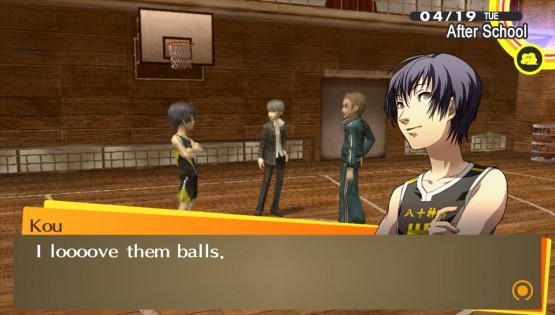
Kou-loves-them-balls-555x315.jpg
translation sure is fun

The Bad

Persona 4‘s weakest element is also its most traditional element – its dungeon crawling. Though visually exciting and featuring a novel Persona swapping system, the dungeon experience is pretty standard JRPG fare, requiring a non-trivial amount of repetitive grinding to improve Personas. Creating strong Personas is fairly important due to the welcome difficulty of boss fights, but the save system makes already boring grinding a dicey prospect, as autosaving is frustratingly absent and save points are purposely scarce. However, execution complexity doesn’t scale up too dramatically on trash fights as time goes on, leading to the average player farming progressively less engaging fights for progressively longer periods of time. This is enabled and encouraged by the ability of characters to eventually bypass the scarcity of sources of HP and MP recovery through various tactics.

Persona 4 also stumbles a bit in regards to its optimization strictness. Though partially there to encourage replaying content as discussed earlier, the perhaps overly tough requirements for perfect or even near-perfect playthroughs are a bit frustrating. Cleverly using the character’s newbie status to force decisions during certain points or to hide easter egg reactions behind statistic walls notwithstanding, running up against a barrier that could have been easily avoided had it been apparent it was coming is an undesirable experience. This sort of meta-analysis-based player action planning is quite common in visual novel games, but this is not a trope this reviewer really wants to see in other genres. Generally, this ends up giving a player who isn’t really doing anything wrong the feeling that they’re doing something wrong, which should be avoided when possible.

The Unique

If Persona 4 is any one thing, it is unique. Blending several game genres together itself is enough to make it stand out, but its secondary elements are also noteworthy. The Persona series is probably even better known for these elements than its gameplay. Shoji Meguro, the Persona series’ music producer and composer, mimics what Persona does with its gameplay by fusing a number of genres and styles together to create something original. The user interface for Persona 4 similarly has a flamboyant flair and clearly defined but complicated style to it. Elements that would normally be passed over are used creatively to further define and clarify what Persona 4 is attempting to do aesthetically.

JRPGs are a very niche product, but Persona 4 is perhaps the best of its era. It wouldn’t be unreasonable for this game to appear in a high position on many personal favorites lists, along with its predecessor (and hopefully its sequel). Though its time has since passed, it is more than worth a shot should the genre appeal to any readers here. It might even make you care about the characters by the end.

b308f59df2.jpg
staring out the window on a vehicle feels

XCOM 2

Developed by Firaxis Games

Release: 2016 (PC, Xbox One, PS4)

XCOM2logo.jpg
skeleton man

Premise

XCOM 2 is the sequel to XCOM, a reboot of a franchise of games of the same name originally released in the nineties. This latest installment continues in its predecessor’s tradition, and is a strategy game that focuses on tactics-based combat, resource management, and outwitting an enemy alien AI. Though originally released for PC only, the game recently made the move to current generation consoles.

XCOM 2 begins in a world where humanity has succumbed to the alien invasion that took place during the previous game. The counter-alien organization XCOM has been all but annihilated, and only pockets of resistance cells scattered across the globe remain. The aliens, known as “Elders”, have put on a facade of peaceful coexistence, but XCOM knows better than to trust them or their police-like forces, the Advent. In a desperate effort, XCOM tracks down and frees its captured former head tactician, The Commander, who was captured during the invasion. As The Commander, it is your task to fight an extensive guerrilla war, develop the most powerful weaponry conceivable, and rout the alien scourge once and for all.

The Good

XCOM 2 does a good job of iterating on the first XCOM reboot’s ideas while also reworking their tactics and meta-game mechanics thematically. The first game’s meta-strategy element was the retention of world powers contributing to the XCOM organization, and the second game essentially reverses that entire idea. The establishing of resistance bases around the world and managing of XCOM’s flow of intel creates similar choices as before, but with a new flavor. Additionally, tactics combat elements have been altered to reflect the more dire times. Players now have a wider variety of objectives, such as sabotaging Advent efforts to progress their technological or military developments, and enemy reinforcements are an often terrifying new inevitability.

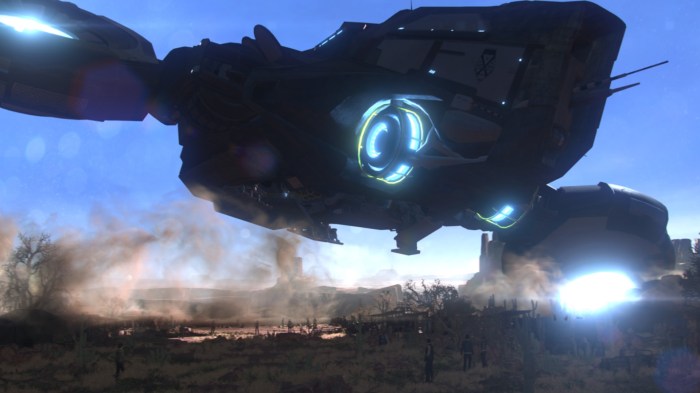
avenger.jpg
a new mobile base better suited to guerilla raids

The most involved portion of the game is still the tactics combat component, which has been fundamentally altered by two big changes. The first change is that many missions begin in a concealed state now, reflecting the successful infiltration of enemy positions. The ability of a player to position their units and orchestrate an ambush effectively is extremely important to completing some of the more challenging missions. The second change seems to be largely based on feedback from the first game – time-sensitive missions are now much more common. This prevents players from always being able to be defensive and cautious with their squads. Both of these changes together, combined with new classes and a myriad of other minor tweaks, creates a frantic and fresh new feeling for XCOM 2‘s tactics gameplay.

Though XCOM 2 did experience an early period of technical difficulties that was rapidly addressed, new levels of polish have dramatically improved the player experience. It was expected that XCOM 2 would have an number of quality of life issues, as the first game is somewhat infamous for visual glitches, hanging, and other little problems that worsen a player’s day. Happily, this reviewer’s almost 200 hours of XCOM 2 have shown that many of those issues have been completely addressed. The modding community has been active right out of the gate as well, creating a variety of minor improvements that further streamline the experience. This reviewer assigns some credit to the developer for this due to their strong efforts to involve community feedback and bring back popular mods from XCOM.

2988016-xcom2_tactical_target-viper_hud.jpg
it’s much more common for characters to face the right direction now

The Bad

XCOM 2 still suffers pervasively from balance issues throughout a number of systems. Soldier classes on the whole are incentivized by game statistics and by good play habits to be more long ranged, which undermines the strength of XCOM 2‘s close range classes. Individual character skill trees, though designed to offer multiple options at level up, often have paths that help the character best fulfill the role. These balance issues become more prevalent at higher difficulty levels as well, where tiny details and probability differences can make or break entire campaigns. XCOM 2 was shifted to have more of a focus on aggressive gameplay to fight back against its ticking clock, but close range classes still feel like toys to mess around with rather than assets to your squad.

2016-02-13_00001.jpg
Rangers are good bullet sponges at least

The meta-game still carries with it issues that the first game encountered. The most frustrating aspect of the meta-game is how players are railroaded into certain tech choices by story progression. Rather than be able to focus on taking different routes through the tech tree on different playthroughs, the story always demands the same objectives be completed, which demands the same types of squads capable of the same feats ad infinitum. This means that deviating from a secret subset of optimized tech paths, which becomes less and less possible on higher difficulties, is inadvisable. Though XCOM 2 is by no means a game about exploring the realm of possibilities offered via its systems, randomizing story beats, or making them less dependent on certain technologies, would go a long way towards improving replayability.

The Unique

Perhaps this reviewer may be misguided, but it seems that gamers don’t get that many great tactics or strategy games these days in the high budget realm. The XCOM series continues to slot perfectly into that unexploited niche. The biggest lesson to take from XCOM‘s success though is its approach to the modder community. Firaxis directly involved several prominent modders that developed The Long War, a highly popular variant of the first game’s campaign, in its new direction. They even went so far as to give them pre-release access to expedite their development efforts on a second Long War mod. This created an environment where, upon release, the Steam workshop for XCOM 2 was immediately flooded with free content in the form of new classes, visual customizations, game optimizations, and fun pointless additions. This model is extremely consumer friendly and should be lauded and copied.

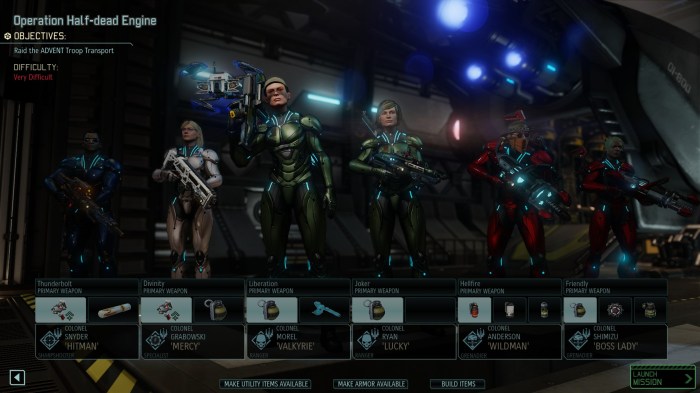
c925749bca.jpg
this is satisfying to a degree that words fail to express

XCOM 2 is a game that just about any fan of the genre will appreciate. The vast array of options for play, including DLC, mods, and difficulty levels, creates a toolkit for players to fine tune their experience to an impressive degree.

Just don’t enable the Alien Hunters DLC.

Status Update

Unfortunately, due to circumstances beyond my control, the review of XCOM2 that was supposed to be finished a few days ago has been delayed. Rest assured that it will make its way out shortly, and that it will not affect the progress on this week’s upcoming review.

Metal Gear Solid V: The Phantom Pain

Developed by Kojima Productions

Release: 2015 (PC, PS3, PS4, Xbox 360, and Xbox One)

maxresdefault.jpg
kept you waiting, huh?

Premise

Metal Gear Solid V: The Phantom Pain (hereafter referred to as MGSV) is the latest, and supposedly last, main story entry in Hideo Kojima’s venerable Metal Gear franchise. MGSV is an action game with a heavy emphasis on stealth, along with some open world components. It was released soon after Ground Zeroes, a dramatically shorter game that functioned as a demo for the engine used in MGSV, and prior to the full online mode known as Metal Gear Solid V Online.

MGSV continues the story of Big Boss, the decorated war hero turned mercenary. After falling into a coma following the destruction of his paramilitary organization, Big Boss awakens nearly a decade later in the mid 1980s. Big Boss quickly establishes a new unit, which he dubs the “Diamond Dogs”, and sets out to the world’s least stable regions in search of the men who wronged him. However, the dangerous war zones of the time hide secrets that force Big Boss to adopt a different goal.

The Good

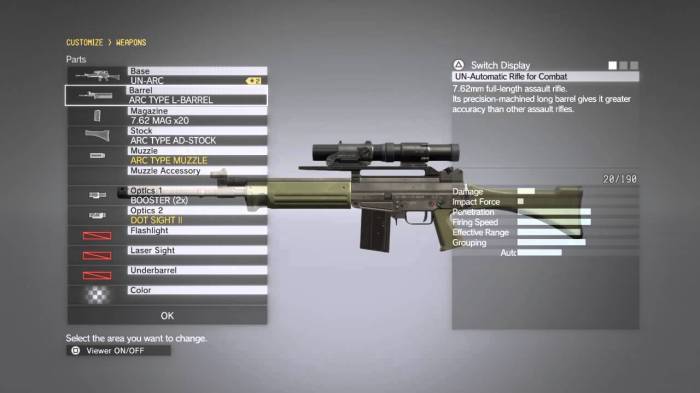
MGSV offers something that was partially promised in the last installment but wasn’t really delivered on: player freedom. Big Boss may only have a set number of slots for utility technologies, weapons, and armor, but the detail in his armory is extremely impressive. For example, when selecting from the massive array of potential weapons, players can tinker with nearly every aspect of their firearm, right down to the length of its barrel. This trend holds for most of the game’s related systems, most importantly its story missions. Though there are certain scripted scenarios, sub-objectives, and primary objectives that do not change, how the player chooses to go about completing them is entirely of their own design. The toolkit MGSV offers players and the sandbox it allows them to play in are both more than a step beyond the ordinary.

maxresdefault.jpg
simply looking at this screen has made you a gun journeyman

Tied in with this new level of customization are the resources required to earn it. The Diamond Dogs’ (or whatever you decide to name them) base of operations, Mother Base, can’t produce the tech you want effortlessly – you have to staff and develop it. Here MGSV borrows from several other Metal Gear Solid games with the staff acquisition mechanic, which allows the player to extract unconscious soldiers from the field and forcibly recruit them. Managing your roster and scouting for the best and brightest during missions and while free-roaming adds another constant but unintrusive sidequest that helps the research and upgrade system feel more natural. A lot of the appeal of completing alternative objectives and optional missions are special troopers with rare skills or the ability to access new technologies. This is a good way to reward players for exploration and completionist tendencies while also not necessitating exhaustive play.

MGSV also breaks with conventional series controls, and the change meshes really well with the previously discussed new mechanics. The new control paradigm feels more like an action game than a pure stealth game, emphasizing aggressive actions such as diving and reflex shots. This allows the player to transition from covert to overt and vice versa on a dime, and doing so is imperative for all but the most flawless of operatives. When things begin to go wrong, a player can react in a number of ways to either maintain or forgo stealth, both of which have their comparative advantages. Though MGSV’s predecessors punish the latter option, the robust nature of the systems now in place naturally make any solution one could come up with using the tools in the armory viable. The game will still punish lack of subtlety in the mission scoring system, but acquiring good mission ratings does not hinge on perfect stealth.

The Bad

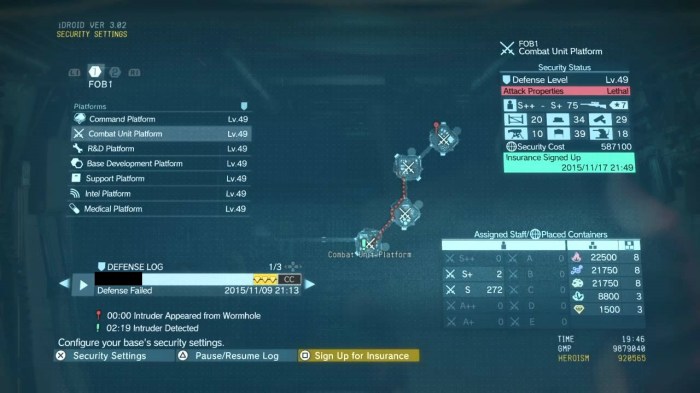
Several systems are debilitated by concepts stolen from mobile game theory, that quagmire of snake oil. Many mobile games use psychological traps and delayed gratification to goad players into buying virtual currency and shortcuts, neither of which they need. MGSV does this by delaying technology development times, then offering players paid ways to expedite these times. Though this reviewer will steer clear of bashing game developers or producers, the drama surrounding MGSV, its creator Hideo Kojima, and the publisher Konami is well-known. Konami’s recent practices would suggest this feature was an attempt to profit more off MGSV‘s potential success, but the origin doesn’t excuse the impact on the game. Finding resources in a primarily single player game, only to have them be unusable, agonizingly held in reserve, and slowly disbursed at real-time intervals is shameful and frustrating. Though somewhat interesting, the base invasion asymmetric multiplayer also has a very strong ‘tacked on’ vibe. Mobile games often throw together some mode that gets players to compete against one another, then offer advantages for premiums. MGSV does this as well, allowing users to pay for stronger base defenses and insurance on their steal-able resources.

maxresdefault.jpg
buy some virtual property insurance

This Metal Gear Solid focuses a lot more heavily on gameplay than story, which is a fine thing to do. That isn’t to say that MGSV is devoid of a plot, but it is fair to say that this installment seems tame by comparison to other absurd and memorable quirks of the past. There are still classic moments and some memeworthy dialogue on occasion, but there is a sharp and indefensible drop in quality after the first chapter. This wouldn’t be particularly noteworthy on its own, but the lackluster story also ends up translating into lackluster mission design at this juncture. The majority of the missions near the end of the game’s content are simply rehashes of older missions with restrictions. Though performing under special circumstances is often a fun challenge, these should have been relegated to side missions and replaced with real story-progessing content. This would probably be greatly preferable to the current iteration of Ubisoft-style cut-and-paste side missions in the minds of most players.

The Unique

The strength of MGSV is in how it fuses its tried and true tactical espionage action to an open-world experience. The Metal Gear series has always brought stellar visuals and great original soundtracks with their corny drama and twisting storylines, but this installment drops the strength of story somewhat in favor of heightened strength in gameplay. Some people may have a problem with that, but with the way things are changing in the AAA development scene, this reviewer considers that to be a breath of fresh air. MGSV delivers a sublime fusion of modern concepts that can provide a staggering amount of entertainment value.

1422496706metal_gear_solid_v_the_phantom_pain-metal-gear-solid-5-the-phantom-pain-kojima-are-you-for-real.jpg
he’s nuclear

Now if we could just get David Hayter back to perfect the voice work we’d really be set.

Final Fantasy XV

Developed by Square Enix

Release: 2016 (Xbox One and PS4)

2917045-finalfantasy15_e32015_20150610_v1thumb.jpg
a subsidiary of Coleman products

Premise

Final Fantasy XV is an action RPG with open world elements from the long-running and recently mechanically diversified Final Fantasy series. After an abnormally long development cycle, the title was finally released onto current generation consoles with plans for minor DLC. The engines developed during the extreme production cycle are rumored to be part of future games in the series.

In FFXV, Noctis, the crown prince of a nation teetering on the brink of war, sets out with his bodyguards on a coming of age road trip to his own diplomatically necessitated marriage. However, things quickly take a dramatic turn, and what follows is a tumultuous series of events that threaten to destroy Noctis’ homeland and endanger its citizens. Thrust into the chaos unprepared, Noctis must journey to restore his country’s royal armory, rescue his bride-to-be, and defeat the evil that lurks in the shadows behind the conflict.

The Good

As with most games in the Final Fantasy series, the graphics push the limits of what is achievable with our available technology, and the score is filled with original orchestral themes. This entry is no exception in the visual department, with an absurd level of detail and quality granted to even the most minute of details. For example, Ignis, a member of Noctis’ guard, wears glasses with an identifiable in-game prescription, as the lenses are fully functional. The weird, creative designs in this installment’s world are also more or less par for the course with Final Fantasy, but the real gem is the game’s soundtrack, which incorporates hits from previous entries in the series. Though FFXV may be one of the series’ more limited soundtracks on its own, the addition of these older songs adds a hefty dose of nostalgia and makes for good traveling music.

C0uwvBxVIAAmfDE.jpg
ridiculous but impressive extra detail

The biggest shock to this reviewer, however, was the strength of the writing when it came to individual characters. Noctis, and his Crownsguard Ignis, Prompto, and Gladiolus, are given a surprising amount of depth. FFXV‘s desire to push the envelope with cutting edge visuals further manifests with each character having unique physical mannerisms that are the clear result of extensive motion capture and animation work. Even the RPG game elements help reinforce individual identities, as each character has special incomparable skills, such as Prompto’s Photography and Ignis’ Cooking, that help build up a sense of uniqueness. Though dialogue for certain repetitive actions can wear thin, for the most part each of the personalities of the characters shine through. The only caveat is that the English-voiced version dramatically alters this by repurposing dialogue to be more sarcastic and Whedon-esque, diluting the characters’ tendencies into generic pseudo-wit.

final-fantasy-15.jpg
shit just got real

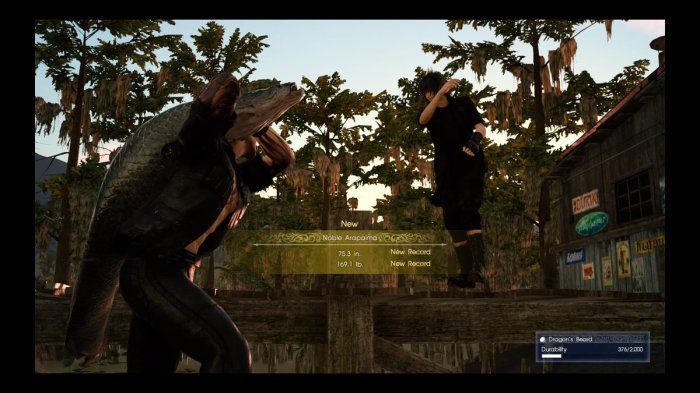
In another somewhat surprising twist, FFXV joins the small list of Final Fantasy games that utilize open world gameplay elements successfully. The overworld is a vast territory that incorporates a number of different biomes and is littered with midwest-style rest stops, motels, and diners. These stops generally serve as questing hubs with different flavors of cut-and-paste creature hunts and fetch quests, and will often contain restaurants where one can gain information about the surrounding area and eat status enhancing meals. Though the main story quest would convey a certain sense of urgency, Noctis can spend his time developing his fishing skills, exploring the wilderness aback a Chocobo, or cruising in his customizable Regalia supercar without consequence.

The Bad

FFXV is another attempt at shifting Final Fantasy towards action combat and away from its turn-based roots, this time with some real success. Combat at its core plays out as an alternation between offensive and defensive stances relying on two main buttons, and focuses less on precise timing and complicated inputs. Unfortunately, despite the simplicity in this system, fighting can frequently be unnecessarily difficult due to the nature of the game’s cluttered environments and targeting system. The camera cannot negotiate terrain and obstacles well, and targeting specific enemies in groups is a frustratingly consistent problem. Seemingly as a potential band-aid to both of these problems, a ‘wait mode’ that freezes combat while Noctis is not moving or acting was added as an optional feature, but enabling this feature defeats the purpose of an action RPG in this reviewer’s humble opinion. Additionally, the special moves that teammates can be commanded to use operate in an awkward way, often resulting in their effectiveness being greatly diminished.

Confusingly, there is a strong ‘cut-content’ vibe coming from FFXV. This feeling originates from two different components – sudden story shifts and bare-bones secondary locations. Though possibly simply due to poorly executed storytelling at times, the gaps in the story seems to hint at the presence of removed and incomplete content. This includes exposition dumps that assume knowledge of unintroduced concepts, unaccounted for absentee time, time-skips that aren’t plot justified, and interactions that, despite being part of the main story and featuring player decision-making, end up being of no consequence. Additionally, the two areas the player explores after the main zone exhibit progressively less content for no real reason. The first area visited has merely one questing hub, and the second area devolves further into a linear FFXIII-type experience. Inexplicably, the maps for these areas are detailed like that of the overworld, and several curious minds have discovered that they feature walkable terrain and strategically placed yet unused NPCs and buildings.

193731-digital_art-Final_Fantasy_XV-Altissia.jpg
I’ll take places I would’ve liked to explore more for 500, Alex

The Unique

Though clearly lacking in some areas, and somehow managing to feel like an incomplete game despite an unbelievable development period, FFXV succeeds in unexpected ways. The road trip atmosphere, the coming of age of our protagonist, and the camaraderie created from it, take hold of the spotlight and force players to experience an actual emotional connection with the characters and their plight throughout the story. If any readers have experienced gaming-inclined men and women struggling to hold back tears upon hearing this new version of “Stand By Me” that has been floating around, this is the game to blame.

In spite of its flaws, Final Fantasy XV is hard not to recommend to those sympathetic to the vices inherent in JRPGs. Though Final Fantasy remains as niche as ever, this is a good omen for the new direction of the franchise, the first since Square Enix decided to diverge from their classic formula.

C2HL6veUcAAvv_X.jpg
Final Fishing XV

Mirror’s Edge

Developed by EA DICE

Release: 2008 (PS3, Xbox 360), 2009 (PC), 2010 (iOS)

d7045b0a99e64ad068c7d86a997f36ae.jpg
Mirror’s Edgy

Premise

Mirror’s Edge is a first person action game largely focused around parkour, the art of moving quickly to get from one point to another as fast as possible. Mirror’s Edge has seen release on most major platforms, and a sequel, subtitled Catalyst, was recently released onto current generation consoles and PC.

In Mirror’s Edge, the player takes on the role of Faith, an illegal information messenger in a somewhat dystopian futuristic city. While Faith’s job as a ‘runner’ is normally to provide her clients with a clandestine way of trafficking secrets, she becomes embroiled in a plot that reveals deep corruption and a coming threat to her way of life. The player must utilize Faith’s mastery of parkour and close quarters combat to unravel the mystery and protect those she cares about.

The Good

For its time, Mirror’s Edge had a sleek, memorable presentation. Though the game world is highly detailed visually, the majority of the it is generally comprised of simple, loud colors. This is because the palette was purposely selected to highlight objects of note, so as to guide the player through more complicated scenarios. This color coordination is how Mirror’s Edge attempts to achieve flow in its gameplay, by hinting at its most effective routes of travel in each level on a moment to moment, more or less natural way. Though this feature can be disabled, and is sometimes not used particularly effectively, this is perhaps the single most clever innovation one could add to a guided game experience about parkour.

maxresdefault.jpg
bright red route highlighting for newbies

Mirror’s Edge also manages to create complexity in gameplay with simple, intuitive controls. The number of moves Faith can perform with a mere two buttons that contextually activate different actions is fairly impressive. With just two buttons and a control stick, the player can execute a series of maneuvers involving direction changes, wall-running, jumping, sliding, rolling, and spring-boarding off various objects, in most cases without relying on specifically designated locations for doing so. The game often demands perfection in executing these tasks, so, unlike other games with simple quick time events that do not feel like the player is truly performing an action, Mirror’s Edge does offer a satisfying level of challenge in that respect.

The Bad

In perhaps the most horrendous sin a full-priced game can commit, Mirror’s Edge is horrifically short. A complete playthrough of the game’s main campaign clocked in at just around three hours, and after that, the only additional play features are races, time trials, and campaign difficulty options. After experimenting with those additional modes for a short time, reaching this unavoidable conclusion was quite disappointing. Generally I don’t like to judge games based on the hour-value of the content provided, but when an offering is so paltry, it must be judged accordingly.

76ab771c3b.jpg
what completion looks like

Mirror’s Edge, though innovative in its use of parkour as a game mechanic, is still extremely broken on a fundamental level. The limited control scheme it utilizes, though brilliant in theory, is unable to compensate for the myriad of situations the player is put in. Execution failures leading to player death are easily triggered accidentally, such as wall-running when one means to climb, as the contextual ‘go higher’ and ‘go lower’ buttons only seem to look at player position, target position, and angle when determining how the player’s interaction will proceed. The player is forced to re-learn how to perform basic climbing and traversal tasks to avoid Faith deciding to take short walks off tall skyscrapers, which makes further deaths caused by these context-driven missteps to be progressively more infuriating.

Additionally, gameplay is often unintuitive or outright broken. Though the game’s system would have a player believing that they could discover their own way to tackle a problem, in the vast majority of cases options are artificially limited in a number of subtle ways. The most potent example I encountered was during a section where Faith is scaling an interior scaffolding structure, where one normal scaffolding panel is very slightly rotated to prevent the player from using it to more quickly solve the climbing puzzle. Combat is also extremely random, with sequences sometimes being completely skippable, other times requiring a series of lucky coincidences for the player to advance. The game tries to indicate which of these fights are mandatory, but on more than one occasion the red aura around enemies indicating that fights were mandatory was not telling the truth.

The Unique

The uniqueness of Mirror’s Edge is pretty self-evident. Parkour is a concept largely pushed to the background of games that feature chasing or climbing in urban environments, and basing an entire game around it is a worthy endeavor. Other than what was mentioned before, there honestly isn’t a lot to write home about. The audio and story accouterments are fairly forgettable, and the gameplay itself is incredibly fickle. However, for those who find endless joy in the rush of Mirror’s Edge‘s style of parkour in gaming, there really aren’t many good alternatives.

Mirror’s Edge is not a particularly smart, polished, or well-designed game, but the niche that it fills is sorely lacking in content. For that, if perhaps that alone, Mirror’s Edge does its premise some justice.

FTL: Faster Than Light

Developed by Subset Games

Release: 2012 (PC), 2014 (Mobile)

latest.png
FTL: Frequently Taking Losses

Premise

FTL: Faster Than Light is a top-down spaceship management simulation strategy game with roguelike elements. This dense phrase means that FTL is a game where one manages the crew and functions of a spaceship as they navigate through a series of encounters. FTL has received a major update since launch, known as the Advanced Edition, which features additional content that can be enabled or disabled at the player’s discretion. This became available to all FTL owners for free alongside the game’s mobile version release.

In FTL, the player is tasked with guiding a starship of their own choosing to the end of a series of randomly generated, but increasingly difficult, sectors of space. Once there, the player is forced into a climactic battle with a massive warship. Players have to utilize the unique benefits each starship offers, make smart choices, and acquire ship improvements to have a prayer of defeating the monstrous final warship.

The Good

FTL is a fairly deep, highly replayable experience in a fast, cheap package. Though roguelikes are generally core gamer staples, FTL is perhaps the most accessible roguelike game on the market. The harshness of this subgenre is certainly present in FTL, but the game is cleverly designed to prevent that aspect from impacting player experience too much. It accomplishes this with its emphasis on player choice, approach to creating challenge, and development of mini-goals.

FTL is choice focused on a moment to moment basis, and makes the player play some part in everything going on around them. At first this prospect can be a bit overwhelming, especially to more casual players – weapon loadout, encounter approaches, ship model and layout selection, crew station orientation, ship power prioritization, combat task management, and even enemy ship section targeting are all player responsibilities. However, despite the sheer volume of tasks, none of them are particularly complicated. The real complexity of FTL lies in planning for the future as you try to create the ideal circumstances for the completion of your mission. This hastens the learning period for first time players by a substantial margin. Over time, the player gains a better understanding of the variables at play, makes gradually more informed decisions, and maybe even defeats the boss once or twice. This increased mastery leads to faster playthroughs as well, making the game equally suited for shorter sessions and longer, multiple run sessions.

ffd7dabfef
some alternate goals and a chance to show off

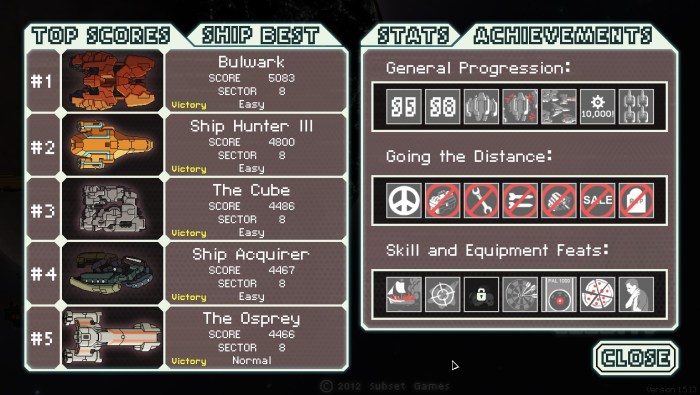
Creating this environment requires a lot of variety, and FTL delivers in several key ways. In addition to providing a vast assortment of game elements to play with, FTL layers the experience with alternative objectives beyond the game’s basic one. These objectives come in two mixable flavors – secret unlock and achievement-driven. Secret unlocks are generally encountered naturally in the course of gameplay, and, if certain conditions are met and appropriate choices made, reward the player with new ships and layouts. Achievements are spelled out in a special menu screen, and don’t generally provide rewards. However, many achievements push further towards experimentation, guiding the player towards the harder to unlock secret ships.

The Bad

FTL‘s weaknesses are most felt in the limitations inherent with roguelikes and some present first order optimal strategies. Compared to other roguelikes, games based on concepts like permadeath and procedural generation, FTL is toned down as far as potential negatives go due in no small part to session length. However, the best in the subgenre have more fleshed out systems that, while generally far more complex, also are less prone to abuse by the player.

Roguelikes as a whole share the problem of occasionally unavoidable “dead ending”, where the player has no recourse but to lose after a set of conditions are met. A severe variant of it would be to make a run in FTL impossible to complete given the zones the player is forced to navigate through. For example, a player ship that begins with weak defenses may be unavoidably guided to fight several ships in a row that will reasonably deal a certain amount of minimum damage, and that minimum amount may be enough to kill the player outright. Though infrequent, this also happens to a certain extent whenever the player isn’t given the opportunity to acquire tools necessary to overcome a situation they’re forced in to because of the game’s approach to procedural generation.

FTL‘s combat is vulnerable to some overly powerful methods of dealing with foes that lessen the impact of its attempt at creating variety in gameplay. This was fixed somewhat with the content patch, but in the base experience choosing certain ships and layouts provided dramatic benefits over others due to their initial weapon loadouts. The Kestral Type-B, for instance, begins the game with four basic lasers. These weapons are more than sufficient to handle all but the hardest content in the game, and players beginning with this loadout are free to purchase defensive upgrades and pool their resources. The Type-B quad laser battery can easily brute force down all but the strongest shields in the game, and buying just one improved laser is often enough to defeat the boss ship given a correctly handled run. Ships like the Type-B that run reliable, fast, high fire count weaponry outperform their peers at almost every level of play, and starting with weapons like that ensures an overly smooth early game that generally transitions into a late game powerhouse.

The Unique

Like with Dragon’s Dogma, the audio and visual supplements to FTL‘s gameplay are noteworthy. The simple electronic soundtrack to FTL meshes well with the graphic style, which is purposely visibly pixelated but not uncomplicated, like many lesser artists can and do produce in other games. Music also changes based on context, which is possibly the most underrated component of any game audio system. The overall presentation is sleek, smooth, and effective, which fits completely with FTL‘s quick and convenient sessions.

FTL_01jcrop2.jpg
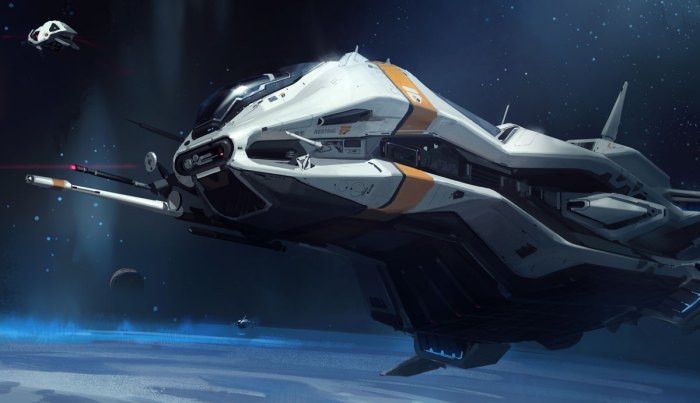
Kestral Cruiser Type-A (source)

FTL is something worthy of utmost respect. Though gamers who enjoy more active or twitch-based games will probably not find this game as enjoyable, FTL is a smart, thoughtful quest for anyone else. For a product of this quality, completeness, and scope to have been produced despite the tiny development team behind it is nothing short of a miracle.