Developed by Capcom
Release: 2012
“Dark Arisen” Version Release: 2013 (PS3, Xbox 360), 2016 (PC)
Premise
Dragon’s Dogma: Dark Arisen is a fantasy action RPG with many traditional western RPG elements. The “Dark Arisen” version is identical in most ways to the original release of the game, then simply titled Dragon’s Dogma, but it additionally comes with bug fixes, gameplay improvements, all of the game’s DLC, and a new optional questing area that serves to lengthen the post-game adventure.
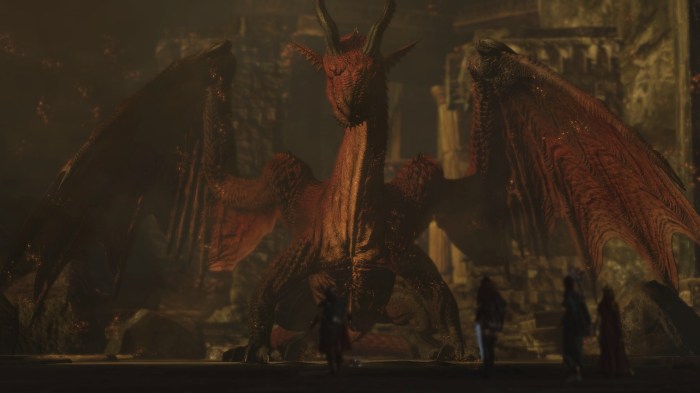
Dragon’s Dogma follows the journey of a player-created custom character trying to reclaim their stolen heart from the giant dragon Grigori, who has cursed them with a sort of vague immortality. The player grows in strength over time as they gain experience, find better gear, and master different classes, known in-game as vocations, which they can change at will to dramatically or subtly alter their play style. The player is also granted ownership over an equally customizable human-like entity known as a Pawn. The player can then create a party together with Pawns recruited from other player’s games to aid them further.
The Good
From a pure gameplay standpoint, Dragon’s Dogma doesn’t do a lot to separate itself from other games in its genre. What it does do well, however, is take existing concepts and remix them into a formula that attempts to scratch multiple itches at once. Somewhere between Dark Souls and Elder Scrolls, the middle child takes some “open world” concepts and mashes them together with an uncomplicated action combat system. Though the free exploration elements aren’t as successful, Dragon’s Dogma‘s role-playing and combat systems are definitely worth discussing.
The role-playing system strikes a good balance between giving the player the ability to craft something unique and guiding classes toward a certain playstyle. For example, one may begin as a Fighter, opting for a close range, melee-focused strategy for their character. Later, they may discover they want a change of pace and switch to a Mage or Sorcerer, which are primarily ranged, magic-focused classes. Finding neither of these to be too desirable, the player inevitably ends up settling for the Mystic Knight, a class which mixes elements of melee focused and magic focused disciplines. The way that players choose abilities and passive benefits also encourages this kind of experimentation, creating opportunities to further clarify your desired profession in the world. At the same time though, vocations still have restrictions about equipment types they can use, and weapons types can behave quite differently from each other, so classes can never deviate too far from what they’re intended to be able to do. This creates a wide template of builds to work with that are all pretty viable despite their deviations.

The combat is extremely easy to learn, but contains just enough flair to be satisfying and memorable. Players have a choice between different weapon types, some unique to special classes, and each weapon has a different set of light attacks, heavy attacks, upgrades, and special moves. Though punishing at times due to the lack of generalized dodging mechanics, there aren’t too many instances where you don’t understand why or how you’ve taken damage or failed to execute. Dragon’s Dogma‘s special moves and climbing mechanics are where it distinguishes itself from its peers though. Outfitting a Warrior with control and disruption special maneuvers creates an entirely different set of goals in party-building and combat than a set of moves that prioritize damage and mobility. These moves also add an extremely enjoyable element of cheese to an otherwise fairly thematically grounded world, without making things feel ridiculous. Additionally, the ability to climb on large monsters to better damage vulnerable spots is a surprisingly fun mechanic, if occasionally wonky to control. Flying through the air, sword in hand, casting absurd spells, and doing your best Shadow of the Colossus impression on towering monstrosities is pretty sweet.
The Bad
The part where Dragon’s Dogma fumbles is on the elements it borrows from Elder Scrolls style games. The open world components, while admirable to strive for, were clearly cut down quite a bit from the developer’s original intentions somewhere along the way. Though one can go anywhere one desires, it’s a bit of a farce. In Dragon’s Dogma‘s world, numerous landmarks in the game are never utilized in any way and have no quest significance or discernible lore value. Additionally, enemies are given health and damage values in such a way as to essentially prevent any and all exploration of certain areas before reaching an appropriate level.
Unlike Elder Scrolls games, where side quests often have their own unique locations associated with them or special plotlines, most side quests in Dragon’s Dogma simply retread visiting locations from story quests, which themselves were underdeveloped from a story point of view. Other quests are more or less impossible to complete without guides that show how to fulfill vague conditions or find otherwise utterly hidden items. More than once in a session the player may find themselves scratching their head, trying to figure out why it is that they’re supposed to be doing what they’re doing. This problem is compounded by generally unhelpful and oftentimes actively annoying NPCs, who show up along seemingly scripted routes approximately whenever they feel like it.
Story woes seem to be an extension of Dragon’s Dogma‘s refusal to fully explain things when called upon to. Discovering exactly how statistic growth affects one’s character class, damage, and defenses, what affinity does, what certain abilities do, and other such details are often glossed over to the point that trial and error or outside resources are the only recourse. It may sound nitpicky, but this is a particularly prevalent shortcoming in this game, even when compared to its peers, which I believe are also fairly bad at this. Truly experiencing all of the content in this game is tough, as the game itself is an insufficient teacher at times.
The Unique
Dragon’s Dogma still shines pretty brightly despite its slightly cookie-cutter nature. Despite the standard fantasy fare of topics, the original visual designs and crisp textures make these now-cliche aspects feel fresh again. Also in service of the game’s thematic premise is a phenomenal nearly five hour long original soundtrack. This godly soundtrack features a wide variety of themes and a staggering number of variants on those themes for just about every enemy type and encounter. If this level of care had been taken with every aspect of the game, this game would be a well-known IP with several installments by now.
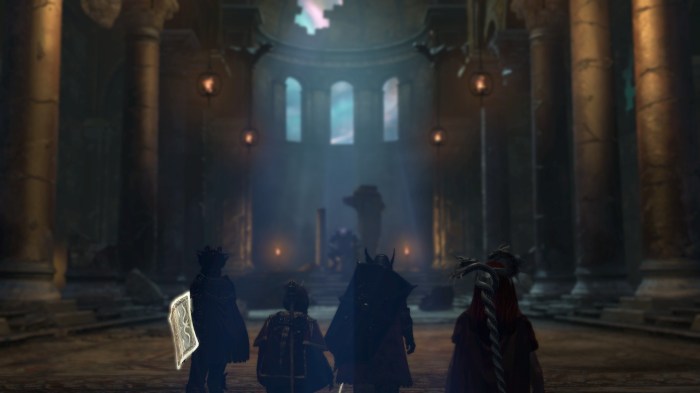
While Dragon’s Dogma is certainly not a game for everyone, I would highly recommend it to fans of action roleplaying games. Enjoying this game’s combat system and aesthetic choices makes it much easier to forgive its other shortcomings. It’s just a shame that the game never fully coalesced.
 The Back Burner